Product overview
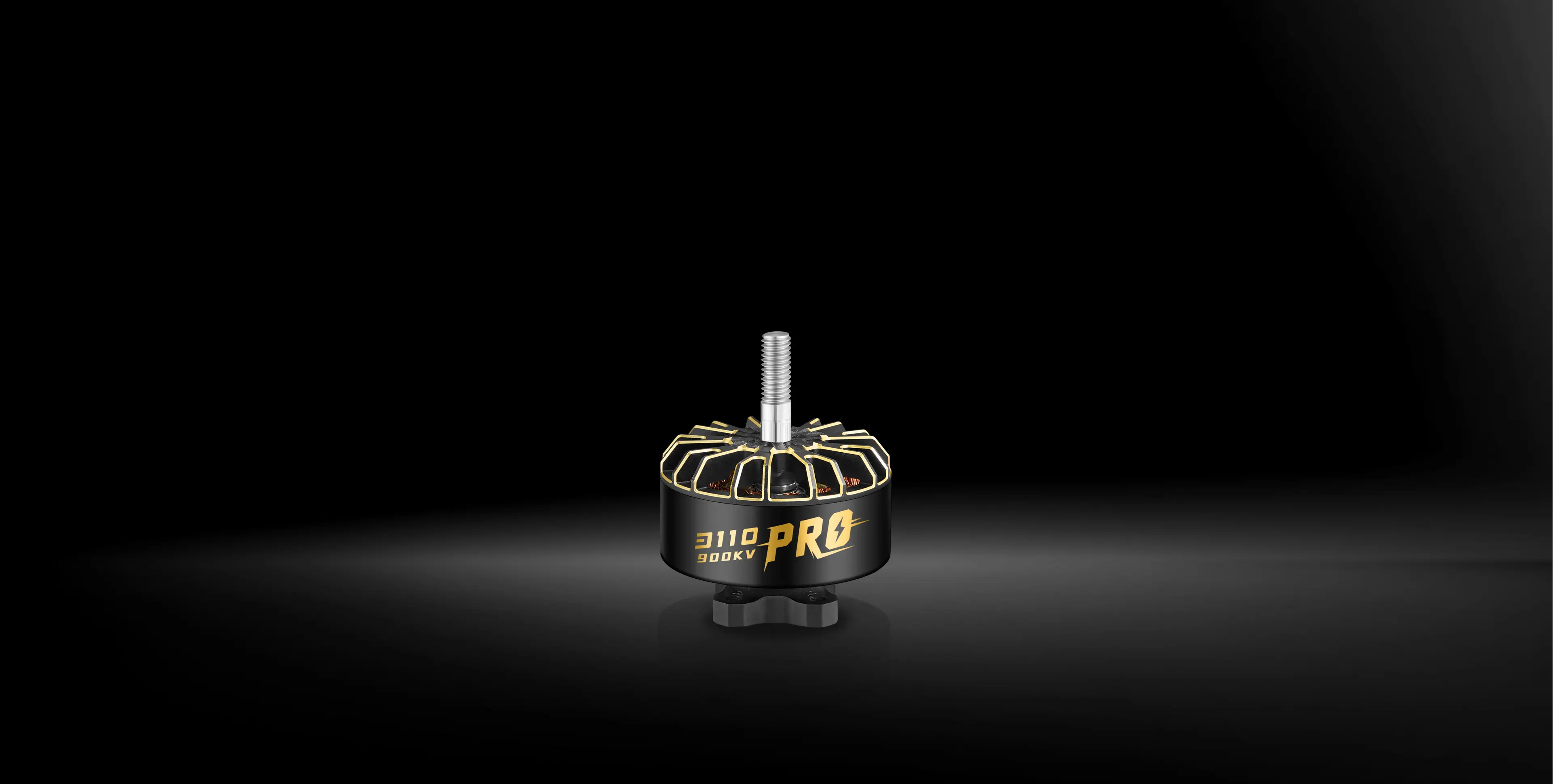
The Yahree LJ7215 KV260 is a propulsion motor for fixed-wing UAV integration. Its 24N22P architecture combines a diameter of 81.4 +/-0.1 mm with a length of 53 +/-0.5 mm and a weight of 556 +/-10 g, defining the motor envelope and mass to accommodate in an aircraft installation. The standard electrical specification is 260 +/-5% RPM/V. Recommended supporting components are an 8S LiPo battery, an 8S / 120 A ESC and a 1910 propeller. Custom KV, appearance and color options are available for OEM/ODM projects.
At 29.3 V, the motor is rated for a maximum continuous 80 A / 2344 W, with a temperature of 85°C at maximum continuous current. The higher 110 A / 3223 W rating is limited to 15 seconds. Magnet operating temperature has a 150°C maximum, with 120°C recommended as the maximum. With the 1910 propeller, the performance data span 2170 g thrust at 30% throttle and 29.3 V to 8250 g at full throttle and 29.0 V. Thrust depends on the propeller, voltage and test conditions.
Specifications
| Specification | Value & conditions |
|---|---|
| Motor diameter | 81.4 +/-0.1 mm |
| Motor length | 53 +/-0.5 mm |
| Slots and poles | 24N22P |
| Motor KV | 260 +/-5% RPM/V |
| Free-load current | 3.8 A maximumAt 20 V. |
| Phase-to-phase resistance | 14.9 +/-8% mΩAt 25°C. |
| Maximum continuous current and power | 80 A / 2344 WAt 29.3 V. |
| Temperature at maximum continuous current | 85°CAt maximum continuous current. |
| Maximum current and power | 110 A / 3223 WAt 29.3 V; 15 seconds maximum. |
| Motor weight | 556 +/-10 g |
| Recommended LiPo battery | 8S |
| Recommended ESC | 8S / 120 A |
| Recommended propeller | 1910 |
| Maximum magnet operating temperature | 150°C; recommended maximum 120°CMagnet temperature; recommended maximum 120°C. |
| Motor torque constant | Kt: 413.15 g.cm/A |
| Motor constant | Cn: 0.05 rpm/g.cm |
| OEM/ODM customization | Custom KV, appearance and color options for OEM/ODM projects |
| Performance at 30% throttle |
|
| Performance at 40% throttle |
|
| Performance at 50% throttle |
|
| Performance at 60% throttle |
|
| Performance at 70% throttle |
|
| Performance at 73% throttle |
|
| Performance at 80% throttle |
|
| Performance at 90% throttle |
|
| Performance at 100% throttle |
|
| Thrust performance dependency | Thrust varies with propeller, voltage and test conditionsPropeller, voltage and test conditions affect thrust performance. |