Product overview
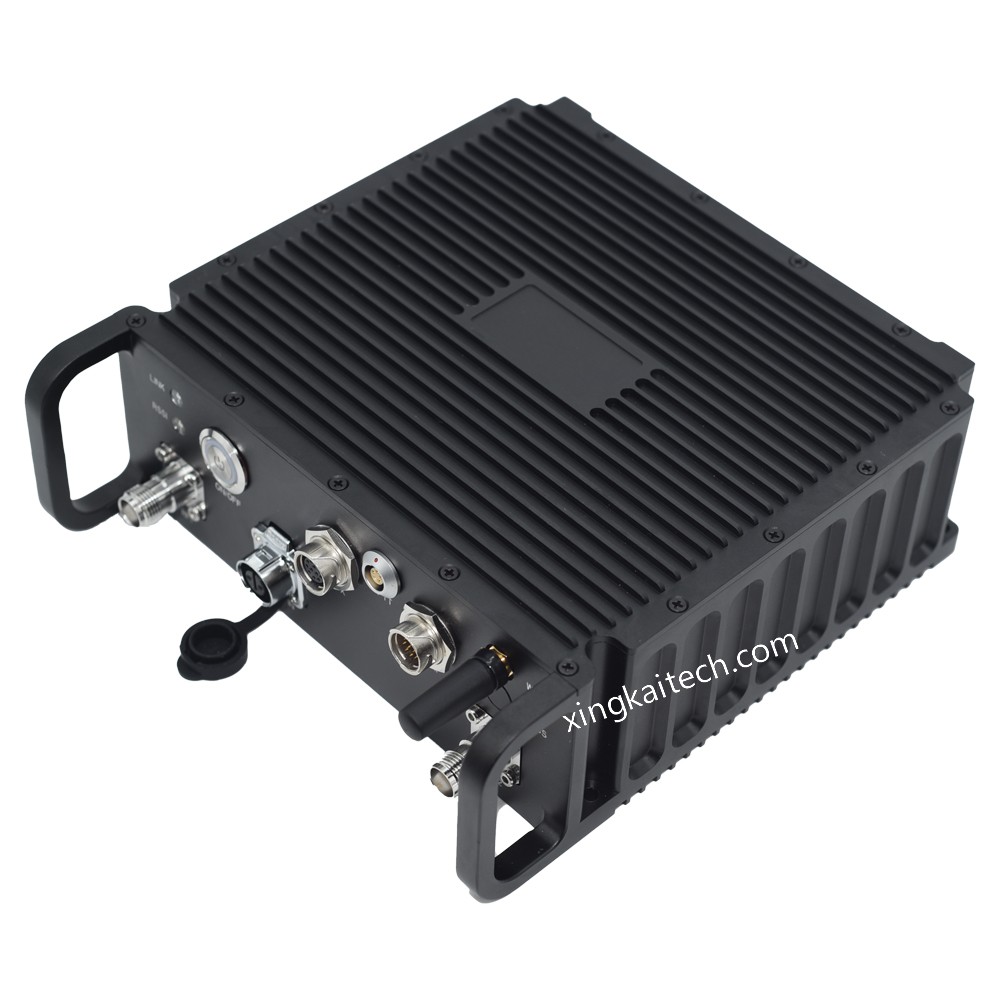
The Xingkai XK-F370 is a vehicle-mounted communications radio for UGV integration. Its distributed, decentralized mesh architecture carries voice, data and images between moving nodes, including under non-line-of-sight conditions. Two 50 W RF outputs define the advertised vehicle configuration. MIMO functions include spatial multiplexing, space-time coding, diversity and transmit/receive beamforming. Point-to-point, multipoint and automatic-relay modes allow star, line, mesh and hybrid arrangements. Single-hop distance is specified as 100–300 KM with a visible path and 1–30 KM in urban areas.
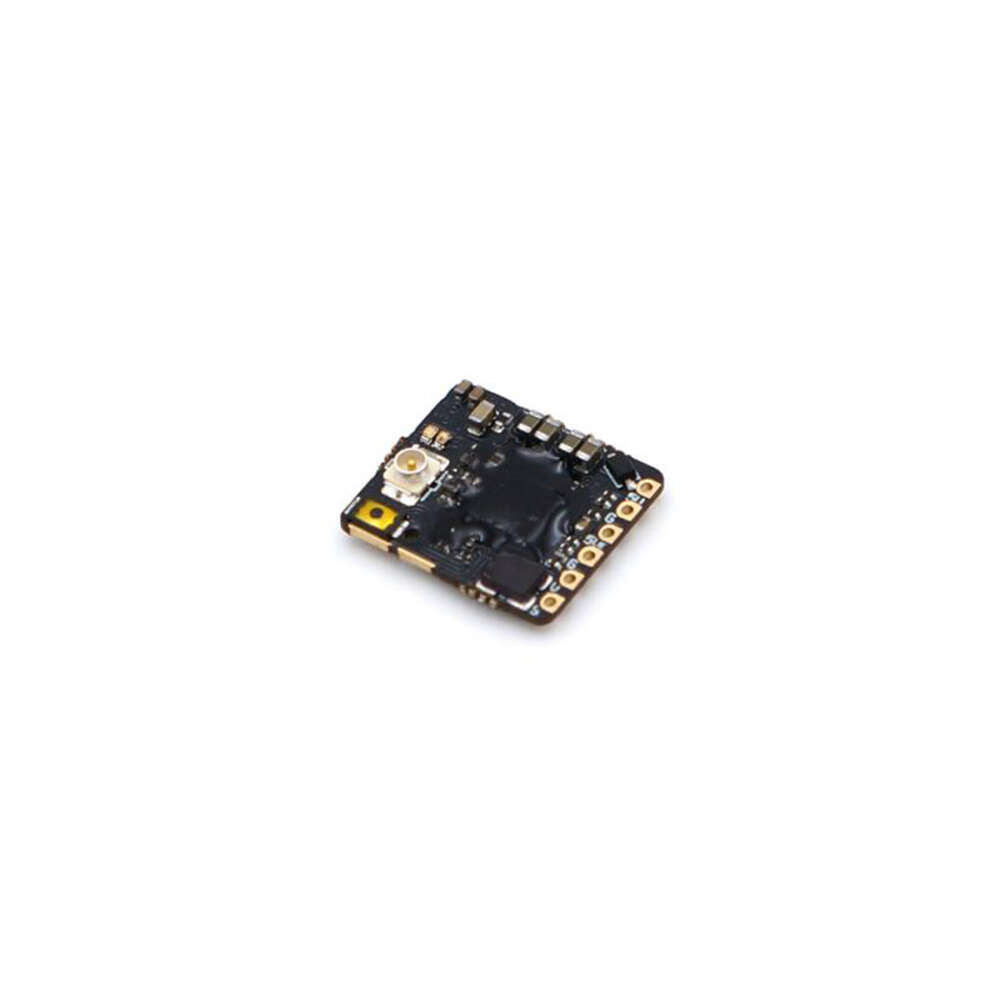
Integration connections include two TNC RF ports, Ethernet, WiFi AP, serial connectivity and DC input, with web management, API and SNMP access. The 50 W×2 configuration takes 14.8–24 VDC. Physical specifications distinguish a 10 W×2 vehicle radio measuring 18.3×15.4×6.3 cm and weighing 1.56 kg from an OEM configuration measuring 10.1×5.4×1.9 cm and weighing 123.5 g. Protection is IP66, with IP67/IP68 customized. Optional network and video extensions broaden integration choices; 40 MHz bandwidth and chip/TF-card encryption also require optional or customized configurations.
Specifications
| Specification | Value & conditions |
|---|---|
| Waveform | Mobile Network MIMO |
| MIMO technology | Spatial multiplexing, space-time coding, diversity, TX/RX beamforming |
| Receive sensitivity | -103 dBm @5 MHz BW5 MHz bandwidth. |
| Channel bandwidth | 2.5/5/10/20 MHz; 40 MHz optional40 MHz optional. |
| Data rate | 1-100 Mbps (20 MHz BW)/180 Mbps (40 MHz BW); adaptive, QoS20 MHz or 40 MHz bandwidth, respectively. |
| Modulation | TD-COFDM; adaptive BPSK/QPSK/16QAM/64QAM/256QAM |
| RF output power | 50 Watts×2Backpack, vehicle rack-mounted or outdoor configuration. |
| Single-hop communication distance | 100-300 KM (visible); 1-30 KM (urban area)Visible path or urban area, respectively. |
| Network modes | Point-to-point, point-to-multipoint, multipoint-to-multipoint; automatic relay; star/line/network/hybrid |
| Single-hop delay | Average 10ms20 MHz bandwidth. |
| Encryption | DES, AES 128/256; customized chip/TF card encryptionChip/TF card encryption customized. |
| Anti-interference modes | Manual spectrum scanning channel selection; optional intelligent frequency channel selection/autonomous frequency hopping/roaming modeIntelligent frequency channel selection, autonomous frequency hopping and roaming mode optional. |
| Local and remote management | Operating frequency, bandwidth, network ID and transmit-power settings; spectrum scanning; real-time display and statistical records of topology, link field strength, signal-to-noise ratio and upload/download traffic; GPS/BeiDou electronic map; temperature, voltage and interference monitoring; software upgrades |
| Startup, network transitions and mobility | Startup less than 30 seconds; network access/update/switchover less than 1 second; no limit on single-system user capacity or mesh hop count; total multihop bandwidth loss less than 30%; automatic carrier tracking; mobile communication over 800 km/hBandwidth loss applies to multiple hops; mobility uses automatic carrier tracking. |
| Frequency ranges | MHz: UHF 350-700; L Band 1000-1500; MIIT 336-344/512-582/566-626/606-678/1420-1520/1430-1444; S Band 1800-2500; Lower C Band 4400-5000; Upper C Band 5100-6000 |
| Operating temperature | -40ºC ~+80ºC |
| Ingress protection | IP66; customized IP67/IP68IP67/IP68 customized. |
| Vehicle-radio dimensions and weight | 18.3×15.4×6.3cm/1.56kg10watts×2 vehicle radio. |
| Color | Black |
| Supply voltage | 14.8-24VDC50Watts×2 airborne/backpack/vehicle rack-mounted/outdoor configuration. |
| Current consumption | Operation 3-6A; standby 0.7-0.9AAt 14.8V; 50Watts×2 airborne/backpack/vehicle rack-mounted/outdoor configuration. |
| Power connection | Twist-lock battery or main cable |
| Battery endurance | Handheld: 10/8 hours for 10.2/6.8AH; backpack: 12/8 hours for 28.8/9.6AH; polymer lithium batteryHandheld and backpack configurations with the specified polymer lithium battery capacities. |
| Basic interfaces | RF 2xTNC; 1-2xRJ45 Ethernet 10/100 BaseT; WiFi AP; 1xRS232-485-422-USB-Bluetooth/1.2-230.4Kbps; DC input |
| Push-to-talk and auxiliary interfaces | MIC, SP, PTT, GND/1xRS485, 1xUSB2.0 OTG |
| Network expansion | Public network routing/4G LTE, WB-NB integration, fiber, satelliteOptional network extensions. |
| Video expansion | Low-delay HDMI/SDI/CVBS; 4K/2K/1080P/720P/D1Optional video extensions. |
| Network and RSSI indicators | Network: steady red disconnected; blinking red starting/disconnected; steady green connected; blinking green voice PTT pressed. RSSI: steady green excellent; steady blue good; steady yellow medium; steady purple slightly worse; steady red poor or link down. |
| Management and control interfaces | Web-based network management/GUI; API secondary development interface/SNMP |
| OEM dimensions, weight and RF connector | 10.1×5.4×1.9cm/123.5g; SMP RF connectorOEM configuration. |
Ask for the XK-F370 100W Vehicle-Mounted MIMO Mesh Radio For UGV price ↑