ChinaDroneRequest a quote →
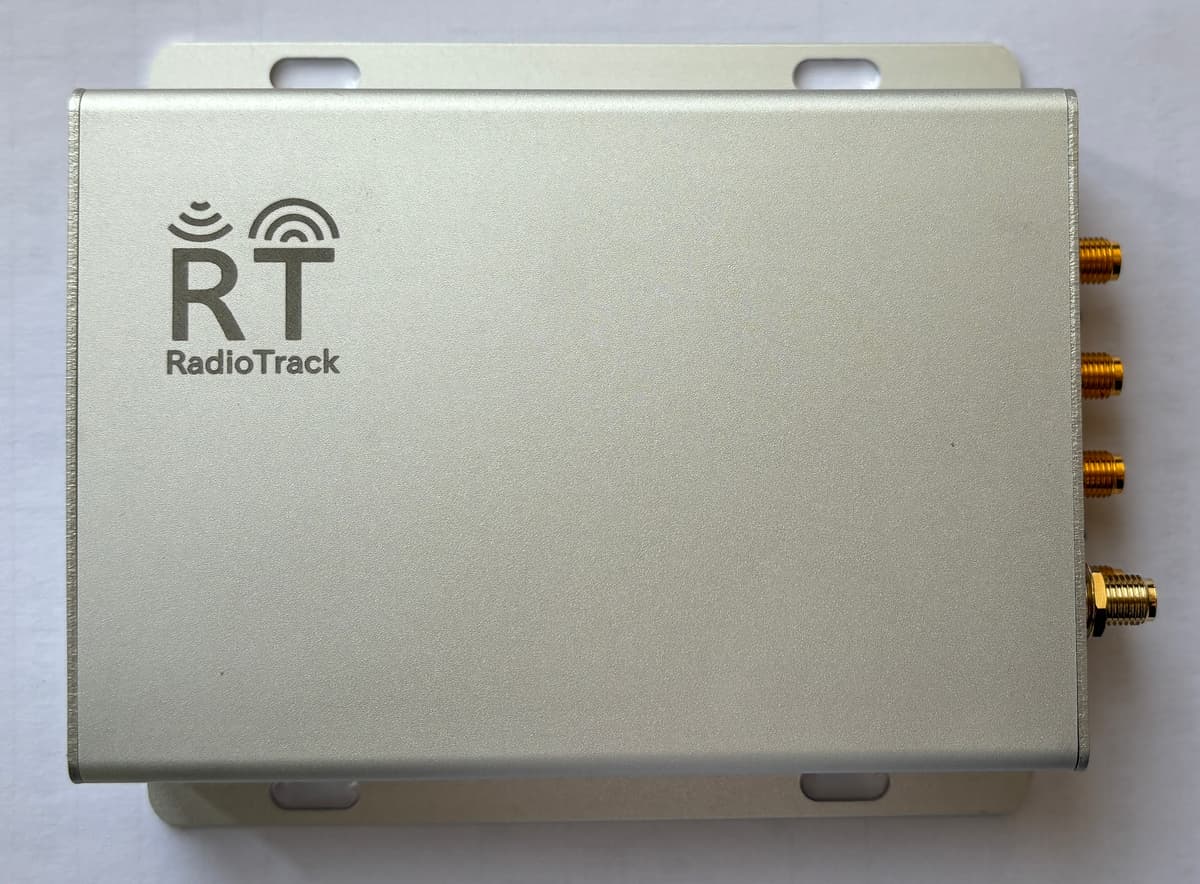
RadioTrack TrackBox_DLW02 drone detection and positioning module in a silver enclosure with side connectors.RadioTrack TrackBox_DLW02 drone detection and positioning module in a silver enclosure with side connectors.

RadioTrack TrackBox_DLW02

The RadioTrack TrackBox_DLW02 is a compact, modular drone detection and positioning module for integration into security systems. It combines spectrum monitoring, DJI protocol decoding and Remote ID tracking with serial and Ethernet data outputs. Communication protocol documentation, configuration tools and integration support help connect drone detection data to operational applications.

RadioTrackPayloads & thermal cameras
Weight
Approximately 280g
Dimensions
130 × 104 × 28 mm

Get a free quote

Product overview

The RadioTrack TrackBox_DLW02 detects, identifies and locates drones, delivering detection data to security and industry systems through serial and Ethernet outputs. Its modular construction measures 130 × 104 × 28mm and weighs approximately 280g. Spectrum monitoring covers 70MHz–6GHz, with emphasis on 2.4GHz, 5.2GHz and 5.8GHz. The module detects more than 10 drones simultaneously and refreshes data once every 2 seconds. Detection reaches up to 3km, depending on drone model and electromagnetic conditions, and can extend beyond 5km with an added low-noise amplifier.

DJI protocol decoding retrieves drone identification, pilot and drone GPS coordinates, and altitude information for generating drone tracks. Remote ID detection retrieves serial number, position, altitude and speed, with positioning distances of 600–1000m or 1.5km in suburban areas. Enhanced WiFi detection supports MAC address decoding for models including DJI Mini SE and Parrot Anafi. Communication protocol documentation, integration support, configuration software and debugging tools are provided. Power consumption is approximately 6W, using Type-C or DC 8–36V power, and the operating temperature range is -20°C to 55°C.
Cameras & sensors

Specifications

RadioTrack TrackBox_DLW02 specifications
SpecificationValue & conditions
Product type and purposeRadioTrack TrackBox_DLW02 drone detection and positioning module for detecting, identifying and locating drones.
Power consumptionApproximately 6W
Power supplyType-C power or DC 8–36V power; DC connector 5.5mm × 2.5mm
Dimensions130 × 104 × 28mm
WeightApproximately 280g
Operating temperature-20°C to 55°C
InterfacesSerial output at 115200 baud; Ethernet output and spectrum data refresh supported
Detection frequency range70MHz–6GHz, with emphasis on 2.4GHz, 5.2GHz and 5.8GHz
Detection rangeUp to 3km; extendable beyond 5km with an added LNADetection distance varies with drone model and electromagnetic environment; extension beyond 5km requires an added low-noise amplifier (LNA).
Positioning accuracyApproximately 10m
Refresh rateOnce every 2 seconds
Simultaneous detectionMore than 10 drones simultaneously
DJI decoded informationRetrieves the drone ID matching the airframe ID, current pilot and drone GPS coordinates, and altitude information; data can be used to generate drone tracks.DJI models supported by protocol decoding.
Remote ID informationRetrieves serial number, GPS position, altitude and speed in real time.Drones equipped with Remote ID.
Remote ID positioning distance600–1000m; 1.5km in suburban areas; extendable with an added LNARemote ID positioning; suburban distance is stated separately. An added LNA can extend distance.
Enhanced WiFi detectionDetects enhanced WiFi video transmission and decodes MAC addresses.Enhanced WiFi video transmission models, including DJI Mini SE and Parrot Anafi.
Construction and system integrationModular design for integration into existing security systems
Documentation and integration supportCommunication protocol documentation and integration support provided
Configuration tools and monitoringConfiguration software and debugging tools provided; remote configuration, parameter adjustment, logging and performance monitoring supported
Expansion optionsSupports high-gain antennas to improve performance and multiple networked modules to cover a larger area.With a high-gain antenna or multiple networked modules.
Installation requirementsAvoid strong interference sources; provide stable power and network connectivity, preferably at an elevated location with clear line of sight.Installation requires a suitable RF environment, stable power and a network connection; an elevated position with clear line of sight is recommended.

Related guides