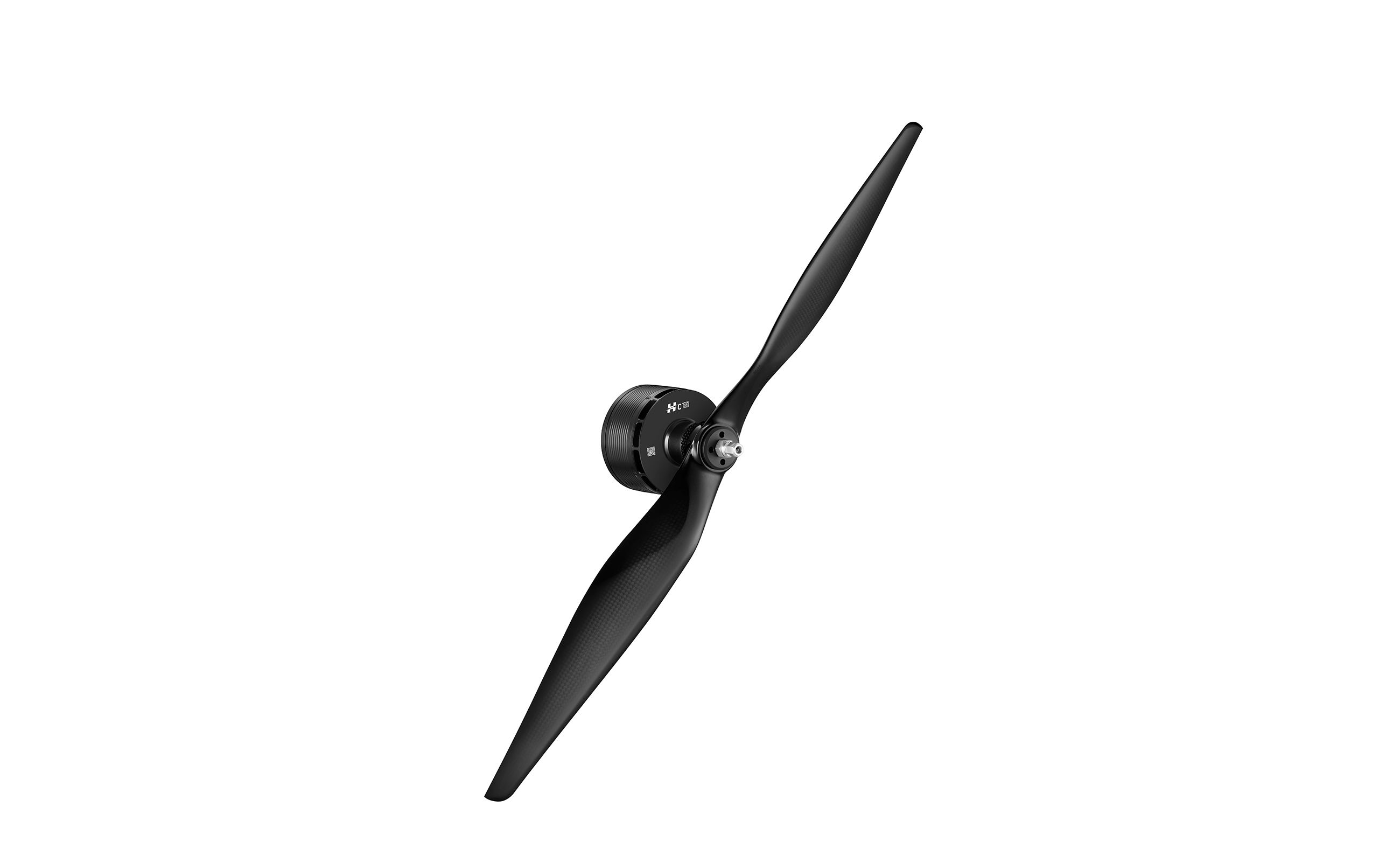
Product overview
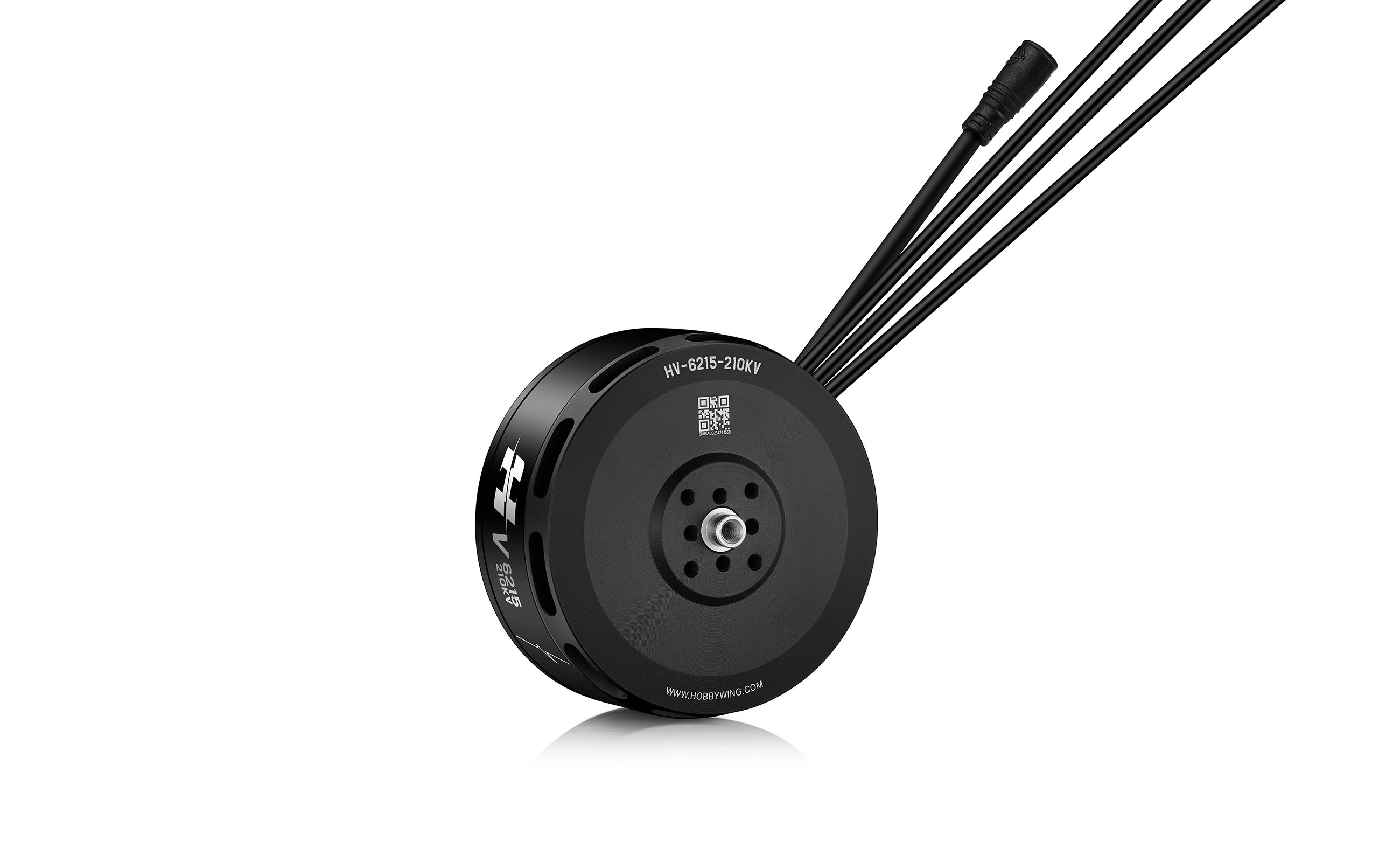
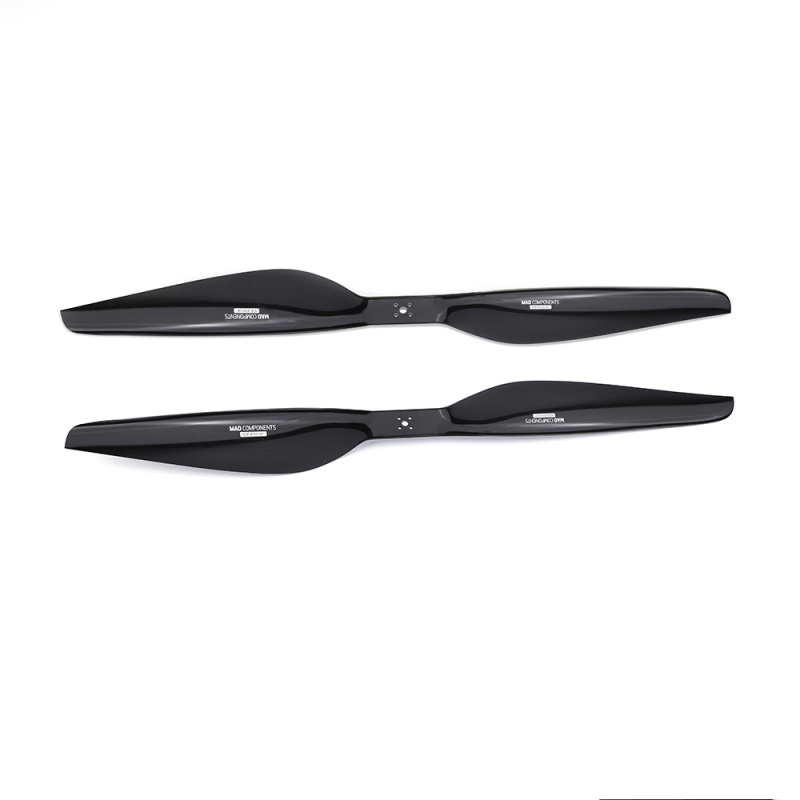
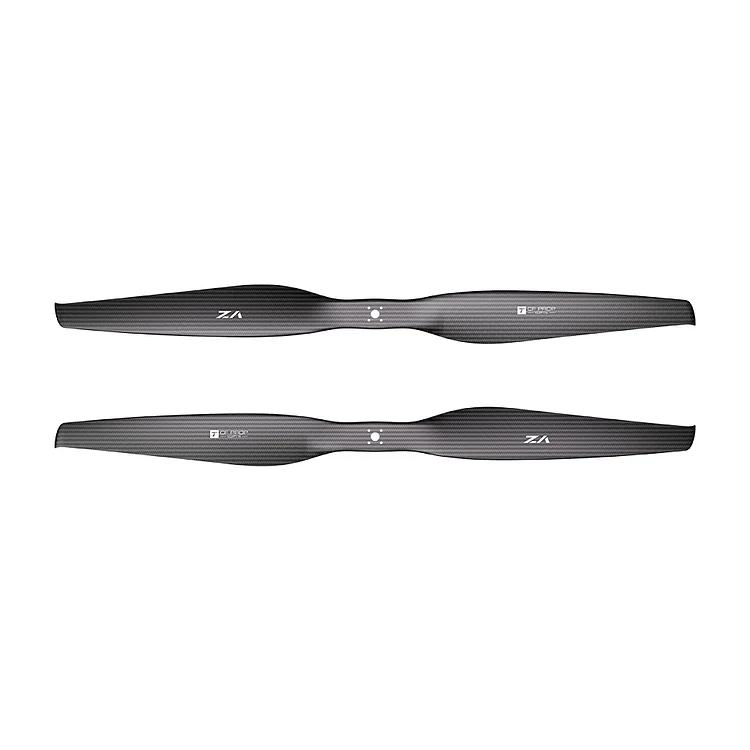
The HOBBYWING C7225 serves as the cruise propulsion motor for an electric fixed-wing UAV. Procurement therefore centers on selecting the 160KV or 190KV variant and integrating the associated propulsion components. The manufacturer presents it as an electric alternative to a 40CC combustion engine. Its recommended configurations pair the 160KV motor with a 24x12 propeller and the 190KV motor with a 22x12 propeller, using a 12S LiPo battery. These combinations are recommendations.
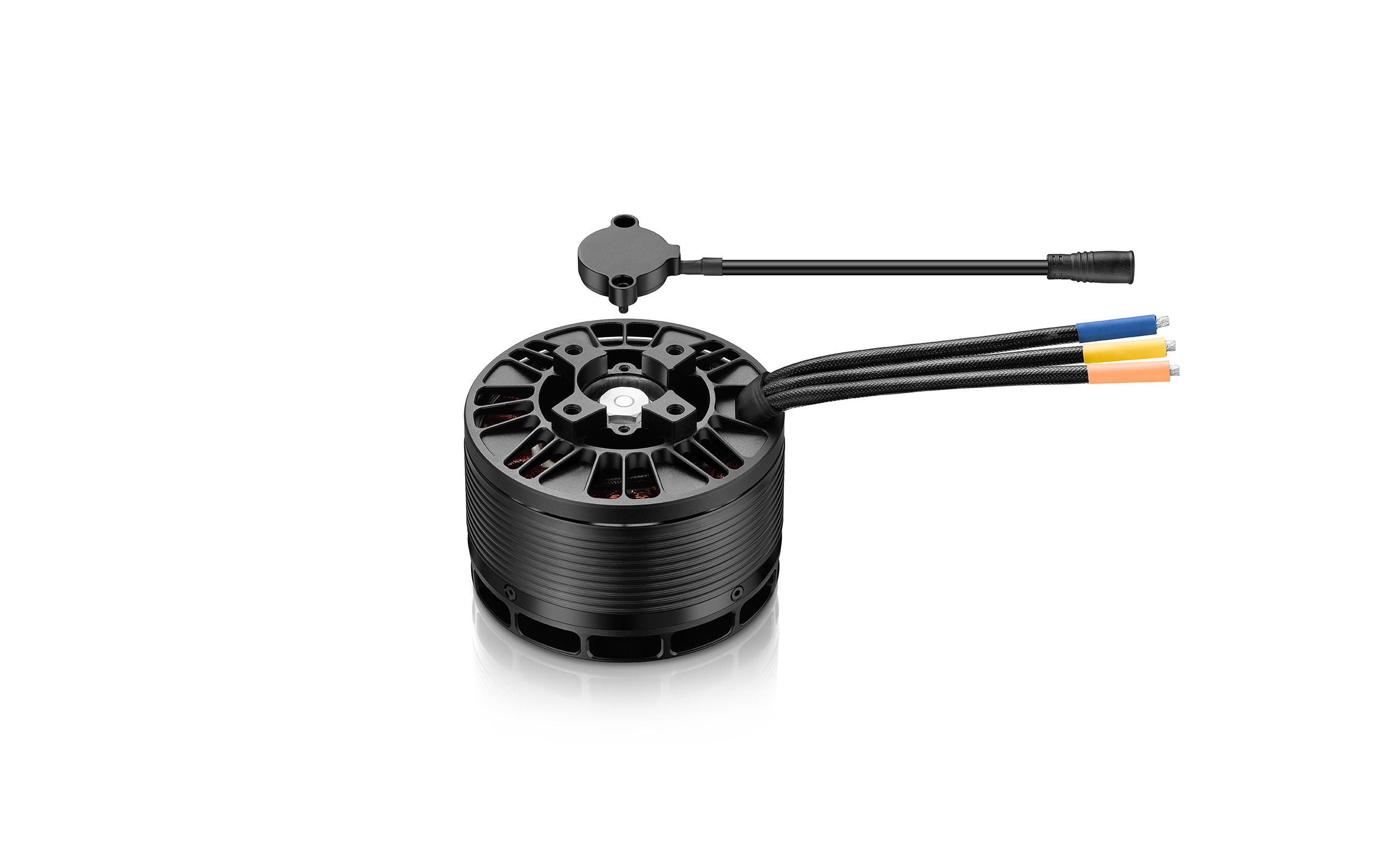
Physical integration depends on the published motor envelope, mounting patterns and propeller interface. Both variants measure 80.9 mm in diameter by 62 mm high and weigh 755 g including wire; these are values to confirm for the selected configuration. The rotor bracket combines a rectangular exhaust outlet with a boss arrangement accommodating folding and non-folding propellers. A detachable adapter incorporates interlocking features, while standard titanium alloy nuts secure the propeller mount. The shaft retention arrangement and triple-bearing construction further define the motor's mechanical architecture.
Electrical propeller locking components are optional, and customizable propeller positioning depends on a HOBBYWING IPC ESC. The recommended ESC choices and mounting dimensions provide specific integration references rather than a universal compatibility assurance. The published maximum continuous output differs between variants: 850 W for 160KV and 770 W for 190KV. Maximum-current ratings require non-hermetic conditions at ambient temperature no higher than 25°C. Thrust and load-performance figures require their stated voltage and propeller configurations; the laboratory data are reference values measured at 25°C and sea level, rather than promises of aircraft performance.
Specifications
| Specification | Value & conditions |
|---|---|
| Manufacturer, model and purpose | HOBBYWING C7225 fixed-wing UAV cruise motor; 160KV or 190KV.Motor component offered in two KV variants. |
| Intended engine substitution | Presented as an electric alternative to 40CC combustion engines.Manufacturer positioning; confirm suitability for the intended aircraft. |
| Cooling architecture | Rotor bracket with rectangular exhaust outlet. |
| Propeller interface architecture | Boss-style rotor bracket accommodating folding and non-folding propellers; detachable adapter base with anti-slip, anti-rotation and interlocking mechanisms. |
| Propeller positioning integration | Optional electrical propeller locking components and IPC ESC-dependent customizable propeller positioning.Electrical locking components are optional; customizable positioning requires pairing with a HOBBYWING IPC ESC. |
| Construction and standard hardware | Standard titanium alloy propeller-mount nuts; knurled shaft interface with side set screw; copper washer, circlip and screw retention; silicone rubber three-phase cable sleeves; triple-bearing system.Titanium alloy propeller-mount nuts are described as standard. |
| Patented design certification | Patent No. 202311210278.7. |
| Protection level | Both variants: IPX5. |
| Motor envelope | Both variants: diameter 80.9 mm × height 62 mm. |
| Slots and poles | Both variants: 24N22P. |
| Stator dimensions | Both variants: 72 × 25 mm. |
| Dynamic balance | Both variants: ≤15 mg. |
| Stator process | Both variants: silicon steel sheet, rust protection and 180°C high-temperature-resistant paint coating.Temperature qualification applies to the stator paint coating. |
| Bearing specification | Both variants: waterproof bearing. |
| Enameled wire temperature rating | Both variants: 220°C.Temperature qualification applies to the enameled wire. |
| Motor axle diameter | Both variants: diameter 10 mm. |
| Magnet temperature specification | Both variants: 180°C.Listed under the magnet specification; confirm the intended temperature qualification. |
| Propeller mounting dimensions | Both variants: 4 × M3 at D20 mm and 4 × M4 at D23 mm. |
| Isolation test | Both variants: 500 V AC high-voltage resistance test.Published isolation-test specification; not an operating voltage. |
| Motor mounting dimensions | Both variants: 4 × M4 at D36 mm. |
| Rated output power | C7225-160KV: 850 W; C7225-190KV: 770 W.Rated output power is labeled maximum continuous; values differ by variant. |
| Battery specification | Both variants: LiPo-12S (48 V). |
| No-load current | 160KV: 4.36 A; 190KV: 5.76 A.Published no-load current values for the listed LiPo-12S (48 V) configuration. |
| Maximum current | 160KV: 132.7 A; 190KV: 137.6 A.Maximum current is qualified for non-hermetic conditions and ambient temperature ≤25°C. |
| Maximum thrust | 160KV: 21.7 kg; 190KV: 19.7 kg.Listed at LiPo-12S (48 V); recommended propellers are 24x12 for 160KV and 22x12 for 190KV. Load-performance data are laboratory reference values measured at 25°C and sea level, not continuous thrust guarantees. |
| Resistance | 160KV: 18.4 mΩ; 190KV: 17.1 mΩ. |
| Wire outlet | Both variants: enameled wire outlet.The wire-size field supplies an outlet description rather than a numerical wire gauge. |
| Wire length | Both variants: 100 mm. |
| Weight | Both variants: 755 g with wire.Published weight includes wire. |
| Recommended propulsion configurations | 160KV: 24x12 propeller; 190KV: 22x12 propeller. Both: XRotor Pro H130A 14S BLDC IPC or XRotor Pro H200A 14S BLDC IPC ESC, 12S LiPo battery and recommended single-motor takeoff weight 30–35 kg.Recommended application combinations, not a statement that propeller, ESC or battery is supplied. Takeoff weight applies to the manufacturer's single-motor recommendation. |
Request a quote for HOBBYWING C7225
Send your application, destination country and expected quantity to the ChinaDrone team. We can discuss product selection, configuration and sourcing from China.
Submit your procurement requirements ↗No account needed. A model number is optional. Your enquiry is handled by ChinaDrone.