ChinaDroneRequest a quote →

Hanbangtang HBT-U5000

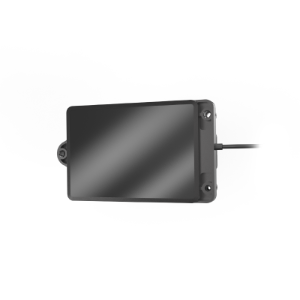
The Hanbangtang HBT-U5000 is a compact Ku-band phased-array radar for detecting small, slow targets at low and ultra-low altitudes. Digital array technology, electronic beam scanning and moving-target processing support airspace surveillance in urban environments and mountainous or hilly terrain, with integration into multilayer detection networks.

HanbangtangPayloads & thermal cameras

Get a free quote

Product overview

The Hanbangtang HBT-U5000 combines a 128-element digital array with frequency-modulated continuous-wave operation in the 14-16GHz Ku band. Its antenna provides 21dBi gain and a 10° beamwidth, with transmit power of 64W (48dBm). Electronic scanning schedules 81 beams across 90° in azimuth and 90° in elevation, enabling rapid changes in beam direction without mechanical inertia. Pulse-Doppler processing and 1024-point moving target detection use long coherent integration to distinguish moving targets within strong ground clutter. The coherent processing interval is 21.5 milliseconds.

For UAVs with an RCS of 0.01㎡, detection range is ≥2km; the calculated signal-to-noise ratio at 2km is approximately 16dB. Minimum detectable speed reaches 0.5m/s. Airspace search takes 1742 milliseconds, leaving 258 milliseconds available for TAS tracking of 12 targets, while TWS capacity is 200 targets. The radar supports coverage gap filling on rooftops, at border posts and around important facilities. Its low power consumption suits battery-powered portable or vehicle-mounted platforms, and its target plots can feed an integrated counter-UAV platform alongside networked surveillance, electro-optical and radio detection sensors.
Cameras & sensors

Specifications

Hanbangtang HBT-U5000 specifications
SpecificationValue & conditions
Product typeHanbangtang HBT-U5000 compact Ku-band phased-array radar for detecting low-altitude and ultra-low-altitude, low-speed, small targets.
Radar architectureDigital array technology and frequency-modulated continuous-wave operation.
Operating frequencyKu band (14-16GHz).
Antenna gain21dBi.
Array element count128 elements.
Beamwidth10°.
Transmit power64W (48dBm).
Detection range≥2km.For a UAV with RCS 0.01㎡.
Scan coverage90° azimuth × 90° elevation.
Beam count81 beams.For airspace coverage.
Data interval2 seconds.
Coherent processing interval21.5 milliseconds.
Airspace search time1742 milliseconds.
Remaining tracking time258 milliseconds.Available for TAS tracking of 12 targets.
Tracking capacity200 targets.In TWS tracking mode.
Moving-target processingPulse-Doppler processing with 1024-point moving target detection (MTD).
Coherent integrationLong coherent integration provides high Doppler resolution to separate moving targets from strong ground clutter.
Frequency separation40MHz separation in each pair, supporting transmit/receive isolation and clutter suppression.Between transmitters 1 and 2, and between the local oscillators of receivers 1 and 2.
Intermediate frequency125MHz.
Signal-to-noise ratioApproximately 16dB.Calculated for a small UAV with RCS 0.01㎡ at 2km.
Minimum detectable speedAs low as 0.5m/s.
Beam steeringElectronic scanning enables rapid beam steering without mechanical inertia.
Platform suitabilityLow power consumption suits battery-powered portable or vehicle-mounted platforms.
Deployment applicationsLow-altitude coverage gap filling on urban rooftops, at border posts and around important facilities.
Sensor networkingNetworks with long-range surveillance radar, electro-optical systems and radio detection equipment to form a multilayer low-altitude detection network.
Target data outputTarget plots provide real-time air situation information to support countermeasure decisions.When connected to an integrated counter-UAV platform.

Related guides