ChinaDroneRequest a quote →

Hanbangtang HBT-B8000

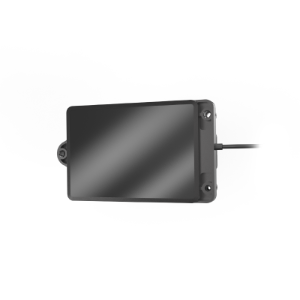
The Hanbangtang HBT-B8000 is a holographic bird-detection radar for airport bird warning and low-altitude surveillance. Broad-beam transmission and simultaneous digital receive beams enable continuous detection. The system combines a flat-panel radar assembly with a computer terminal for target tracking and classification, including discrimination between drones and bird flocks.

HanbangtangPayloads & thermal cameras

Get a free quote

Product overview

The Hanbangtang HBT-B8000 uses low-gain, broad-beam transmission and simultaneous digital receive beamforming for continuous surveillance without beam scanning. Multiple high-gain narrow receive beams support spatial coverage, while extended signal accumulation provides high-resolution Doppler information for target detection and recognition. Micro-Doppler analysis distinguishes drones from bird flocks, complemented by multi-feature recognition and real-time spectrum analysis. Alongside airport bird warning, applications include low-altitude surveillance of key sites, border and coastal warning, and battlefield situational awareness. Two radars deployed in a crossing arrangement provide wider coverage.

The system comprises a flat-panel radar assembly and a computer user terminal connected by a network cable. The panel integrates separate transmit and receive antennas, a transmitter, digital waveform generation, multichannel digital reception, real-time signal processing, a frequency synthesizer and a power supply. The computer associates target plots, maintains tracks and classifies targets using multiple features. An open software radar architecture separates hardware and software to support functional upgrades and expansion. The HBT-B8000 provides continuous day-and-night, all-weather detection.
Cameras & sensors

Specifications

Hanbangtang HBT-B8000 specifications
SpecificationValue & conditions
Product typeHanbangtang HBT-B8000 holographic bird-detection radar
Operating bandX or S band
Signal typeLinear frequency-modulated signal
Pulse repetition frequency≥5 kHz
Duty cycle1%–20%
Detectable target speed1–100 m/s, extendable to higher speeds
Detection range: pigeon≥8 kmSingle airborne pigeon.
Detection range: sparrow or swallow≥4 kmSingle airborne sparrow or swallow.
Detection range: low-altitude small targets≥4 kmSmall targets at altitudes of 0–50 m.
Detection range: bird flocks≥10 kmBird flocks.
Detection range: helicopters and stealth missiles≥15 kmHelicopters and missiles with stealth capabilities.
Detection range: large aircraft≥150 kmPassenger aircraft, transport aircraft and similar targets.
Detection range: armored vehicles≥20 kmGround armored vehicles.
Detection range: small vessels≥10 kmSmall surface vessels.
Detection range: medium and large vessels≥40 kmMedium and large surface vessels.
Elevation coverage0°–30°
Azimuth coverage100°
Range positioning accuracy≤50 mRoot mean square error.
Azimuth positioning accuracy≤1°Root mean square error with 16 azimuth array elements.
Data rate≥1 Hz
Transmit and receive architectureLow-gain broad-beam transmission without beam scanning; digital beamforming creates multiple simultaneous high-gain narrow receive beams.
System componentsRadar array assembly and user terminal.
Radar assembly constructionFlat-panel assembly containing separate receive and transmit antennas, transmitter, digital waveform generation module, multichannel digital receiver module, real-time signal processing module, frequency synthesizer and power supply.
User terminal and connectionA computer performs target-plot association, tracking and classification using multiple target features; a network cable connects it to the flat-panel array.
Primary applicationDeployment around airports for bird-activity early warning and flight safety.
Additional applicationsLow-altitude surveillance of key sites, border and coastal warning, and battlefield situational awareness.
Expanded coverageA two-radar crossing deployment provides wider coverage.Two radars deployed in a crossing arrangement.
Continuous operationContinuous day-and-night, all-weather detection.
Software architectureOpen software radar architecture with decoupled hardware and software for functional upgrades and expansion.
Recognition and analysis technologyMicro-Doppler feature analysis to distinguish drones from bird flocks, multi-feature fusion recognition and real-time spectrum analysis using DPX digital phosphor technology.

Related guides