Product overview
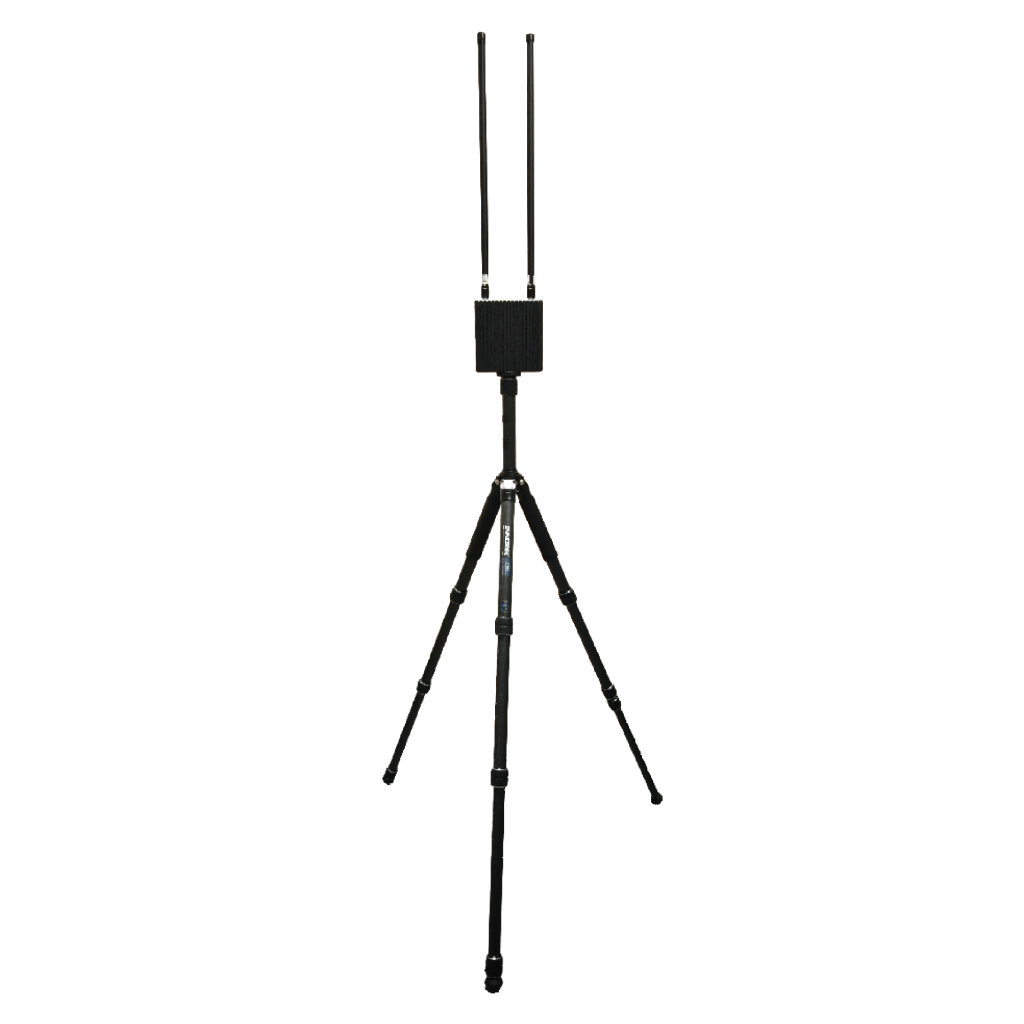
The CroSkylink C32S-20W is a vehicle wireless IP mesh radio intended for applications including UAV relay and command-and-control links. Its SDR architecture combines Zynq70XX and AD936X hardware with a distributed network in which nodes can join or leave dynamically. The unit measures 269x180x64mm and weighs approximately 3.30kg, providing concrete space and mass requirements for integration. Two Ethernet ports and three serial interfaces connect external equipment, with customizable TTL, RS232, RS422 and RS485 options. IP voice conferencing and PTT intercom are supported, and a PTT handset is included.
The radio delivers 43dBm transmit power, specified as 20W through 2x10W, with adjustment in 1dBm steps and power consumption of 20~100W. Its product frequency ranges are 500~680MHz and 1300~1500MHz, adjustable in 1MHz steps, with customization across 70~6000MHz. Peak data rate is 220+ Mbps at 40MHz bandwidth; the 300+ km communication range requires line of sight and depends on the environment. Standard operating temperature is -20~+65℃, with -40~+65℃ customizable. Larger 128- and 256-node networks, MIMO, adaptive frequency selection and wideband frequency hopping are optional configurations.
Specifications
| Specification | Value & conditions |
|---|---|
| Product identity and purpose | CroSkylink C32S-20W vehicle wireless IP mesh radio |
| Dimensions and weight | 269x180x64mm; ≈3.30kg |
| Transmit power and power consumption | 43dBm (20W: 2x10W), adjustable in 1dBm steps |
| Power consumption | 20~100W |
| Data interfaces | 2x Ethernet, 3x serial; TTL, RS232, RS422, RS485 customizableSerial interface types customizable. |
| Voice communication | IP voice conferencing and PTT intercomPTT handset included. |
| Operating temperature | -20~+65℃ standard; -40~+65℃ customizable. Functional specification: -40~+65°C with battery excluded; low-temperature battery customizable.Standard and customizable temperature configurations; separate battery-excluded qualification. |
| Hardware platform | SDR platform based on Zynq70XX + AD936X |
| Network architecture, scale and modes | Distributed, centerless wireless IP mesh ad hoc network with dynamic node joining/leaving; up to 64 nodes per frequency, optionally 128 or 256. Modes: mesh, chain, point-to-point, point-to-multipoint, multipoint-to-multipoint.128-node and 256-node configurations optional; node counts apply to a single frequency. |
| Waveform and modulation | COFDM, optional 2T2R/MIMO, dynamic TDMA and highly dynamic routing; adaptive QPSK/16QAM/64QAM/256QAM.2T2R/MIMO optional. |
| Interference management | Optional adaptive frequency selection and wideband frequency hoppingAdaptive frequency selection and wideband frequency hopping optional. |
| Communication frequencies | Product frequency range: 500~680MHz / 1300~1500MHz, adjustable in 1MHz steps; 70~6000MHz customizable.Product frequency range adjustable in 1MHz steps; frequencies customizable within 70–6000MHz. |
| Hardware-platform communication frequency options | 560–680MHz / 1300–1530MHz / 4200–4400MHz / 4400–5000MHz / 5000–5800MHz; customizable within 70–6000MHzCustomizable within 70–6000MHz. |
| Bandwidth modes | 1.25/2.5/5/10/20/30/40MHzHardware-platform bandwidth modes listed as optional. |
| Data rates | Peak data rate: 220+ Mbps at 40MHz. Optional diversity: 25+Mbps@10MHz, 50+Mbps@20MHz, 90+Mbps@30MHz, 110+Mbps@40MHz. Optional MIMO: 50+Mbps@10MHz, 100+Mbps@20MHz, 180+Mbps@30MHz, 220+Mbps@40MHz.Peak rate at 40MHz bandwidth; diversity and MIMO transmission-rate configurations optional. |
| Communication range | Up to 300+ km LOS, depending on environmentLine of sight; range depends on environment. |
| Receiver sensitivity | -103dBm@5MHz, -105dBm@2.5MHz, -107dBm@1.25MHzSensitivity values correspond to the stated bandwidths. |
| Delay, multi-hop capability and startup | Average single-hop delay ≈7ms; over 10 hops; startup approximately 25 seconds.Delay is an average single-hop value. |
| Mobility support | Over 1000km/h @1.4GHz; Doppler offset compensation: 3KHz@Zynq7020, 6KHz@Zynq7035At 1.4GHz; Doppler compensation depends on processor configuration. |
| Multicast, link optimization and QoS | IP multicast/broadcast, blacklist/whitelist and serial point-to-point/point-to-multipoint multicast; QoS routing and weak-link removal; priority by IP address, protocol+port and DSCP. |
| Internet gateway and WiFi AP | Any node can serve as an Internet gateway for all nodes; optional handheld/backpack WiFi hotspot for phones, tablets and laptops.WiFi hotspot optional for handheld/backpack configurations. |
| Positioning and map functions | GPS/BD positioning with map and topology overlay display, integrated or externalGPS/BD positioning integrated or external. |
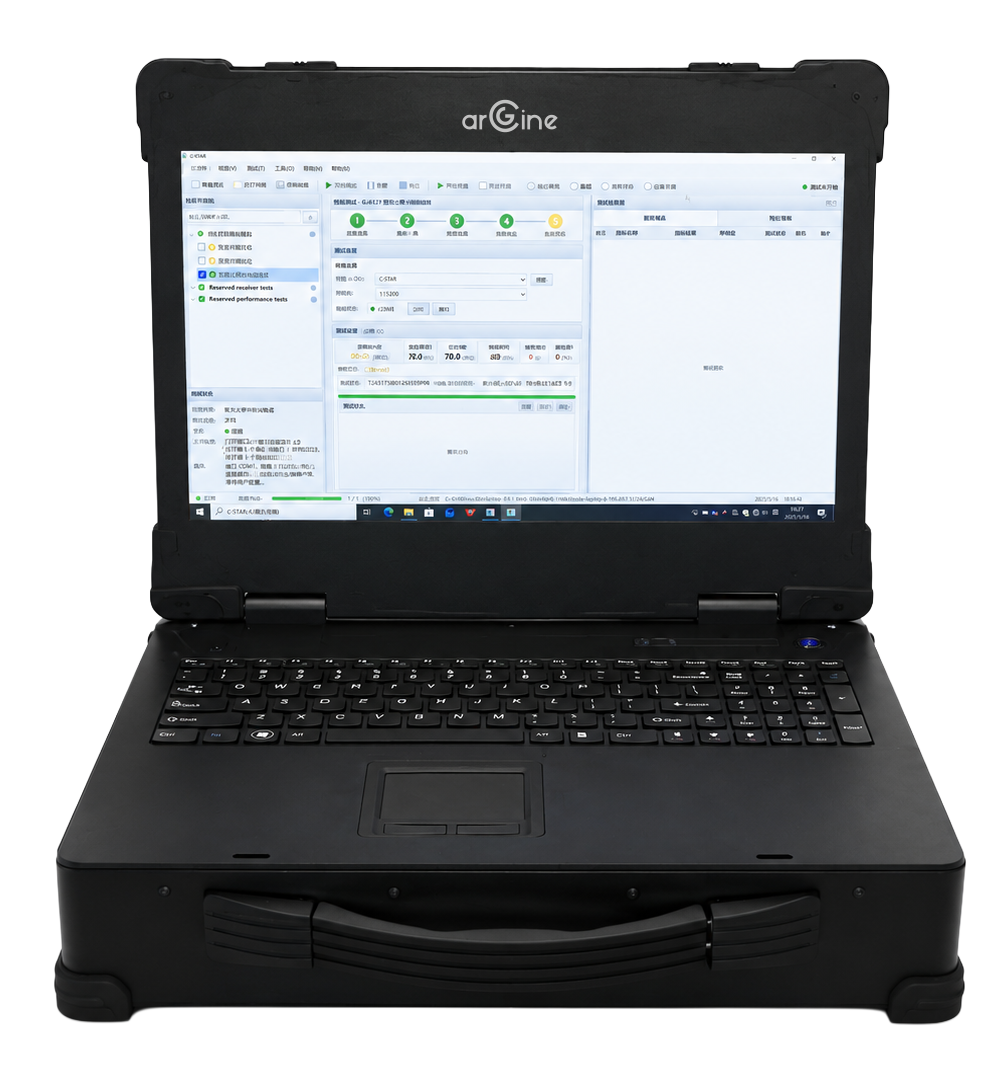
| Management platforms and network configuration | WEB_UI, Windows_APP, Linux_APP and Android_APP. Any radio's WEB_UI can configure all nodes. Controls frequency, bandwidth, power, IP and key; displays topology, link quality, signal, noise and temperature; supports remote upgrades and one-key global parameter changes. |
| Status, path and fault monitoring | Displays topology, noise, signal, distance, rate, time-slot usage and temperature; queries actual data paths; alerts common radio anomalies and faults.Through WEB_UI. |
| Video and map management | Accesses and manages multi-channel camera video; displays actual positions and node distances on a 2D offline map.Through WEB_UI; map display uses a 2D offline map. |
| Customization | Frequency, power, size, interface, protocol and management software customizable |
| Loop detection and encryption | Supports multiple nodes connected to the same switch or LAN; DES/AES128/AES256 encryption. |
| Spectrum scanning and rate configuration | Monitors noise and burst interference to optimize operating frequency; adaptive or fixed MCS, adaptive by default.MCS adaptive by default; fixed mode selectable. |
| IP passthrough | Transparent IP transmission between Ethernet, Ethernet-serial and serial-serial |
| Application roles | Vehicle mesh, UAV relay and command-and-control links, public safety and emergency communications, border surveillance, industrial IoT and robotics, forest-fire and mountain communications, smart-city backhaul, maritime and offshore communications. |