Millimeter-Wave Radars for Drones
Compare millimeter-wave radars for drones from Chinese manufacturers: obstacle avoidance and terrain-following radars by band, range, field of view and weight.
Millimeter-wave radars only: compact mmWave radar sensors for obstacle avoidance and terrain following on drones. Radar altimeters and anti-drone detection radars are on their own pages. Listings include single-direction, 360-degree and 4D radars.
Quick selection guide
Agricultural drones
Terrain-following radars that hold a steady height over crops and slopes.
Obstacle avoidance
Forward, rear or 360-degree radars that detect wires, trees and structures.
Low-altitude inspection
Compact radars that measure distance to ground or obstacles in dust, smoke and darkness.
Obstacle avoidance radars
View all 8 →Obstacle avoidance radars, from single-direction units to 360-degree and 4D radars.
8 products from 2 manufacturers
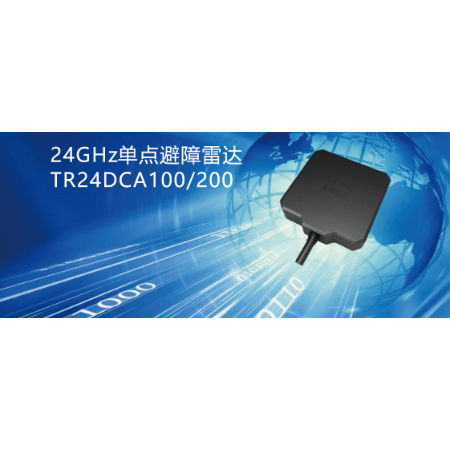
Topradar TR24DCA200
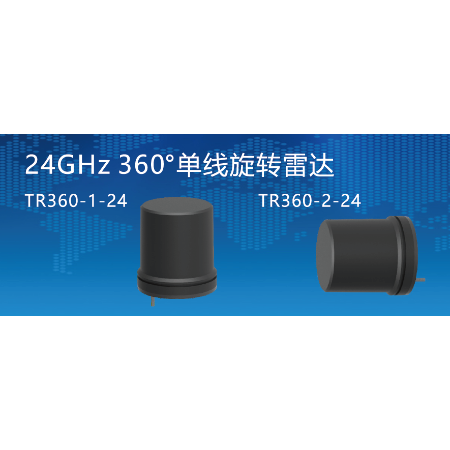
Topradar TR360-1-24
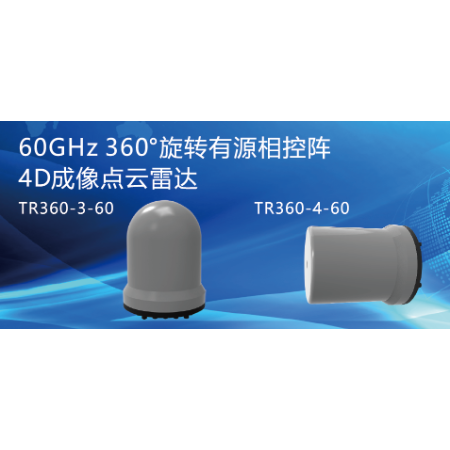
Topradar TR360-3-60
Nanoradar SFR-2K
- Applications
- ADAS-equipped cars, SUVs, trucks, buses, logistics vehicles, Robotaxis and agricultural vehicles; highway, national-road, urban and rural operation; expandable to UAV obstacle avoidance, unmanned vessels and wind turbines; all-weather operation.
- Weight
- 230 g
Terrain-following and altitude radars
View all 4 →Terrain-following and altitude radars that measure distance to the ground.
4 products from 3 manufacturers
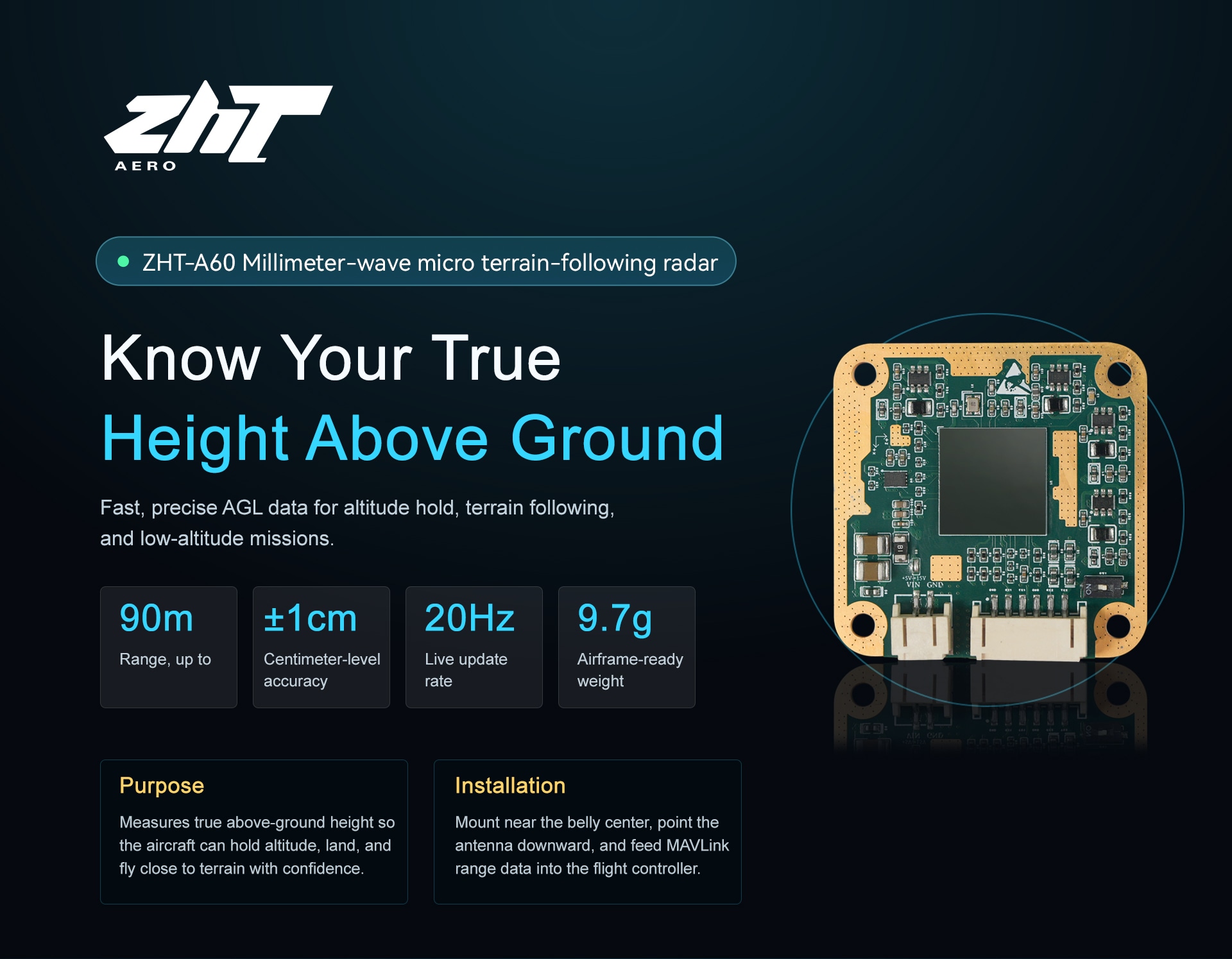
What to check before you buy
- Band
- Check the frequency band (24 GHz, 60 GHz, 77 GHz) and that it is allowed where you operate.
- Range and accuracy
- Compare the detection range and ranging accuracy, and what target the range was measured on.
- Field of view
- Check horizontal and vertical coverage; obstacle avoidance needs wider coverage than height holding.
- Update rate
- Faster updates suit fast, low flight such as spraying.
- Interface
- Match the output (CAN, UART) and protocol to your flight controller.
- Weight and protection
- Check the weight and the dust and water protection rating.
Millimeter-wave radars FAQ
Why use radar instead of a camera for avoidance?
Radar works in dust, fog, smoke and darkness, where cameras struggle.
What is terrain following?
The drone keeps a set height above the ground surface, using a downward radar to follow slopes.
Can radar detect thin power lines?
Some obstacle avoidance radars are designed to; ask for the minimum wire size and range tested.