ChinaDroneRequest a quote →
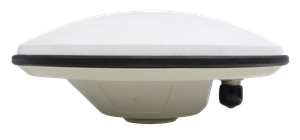
Harxon HX-CSX646A external surveying antenna with a white domed housingHarxon HX-CSX646A external surveying antenna with a white domed housing

Harxon HX-CSX646A

The Harxon HX-CSX646A is a four-system, full-band external surveying antenna combining GNSS reception with low-orbit C-band communication. Designed for surveying and monitoring applications, it features a multi-feed antenna design, an IP67 structure and a shared TNC interface in a compact Φ152 × 62.2mm housing.

HarxonDrone flight controller
Applications
Geodetic surveying, marine surveying, waterway surveying, dredging surveys, seismic monitoring, bridge deformation monitoring, landslide monitoring, terminal container operations and low-orbit C-band communication.
Operating voltage
+3.3 to +12VDC
Weight
≤400g

Get a free quote

Product overview

The Harxon HX-CSX646A combines GPS, GLONASS, BDS and GALILEO reception with low-orbit C-band communication in a four-system, full-band external surveying antenna. Its applications include geodetic, marine, waterway and dredging surveys, together with seismic monitoring, bridge deformation monitoring, landslide monitoring and terminal container operations. High-gain antenna elements and a wide beam support reception at low elevation angles and satellite acquisition in obstructed environments. A multi-feed design aligns the phase center with the geometric center, with a phase center error of ±2mm.

The compact antenna measures Φ152 × 62.2mm and weighs ≤400g. Its robust IP67 structure protects against dust, ultraviolet radiation and water, while GNSS and C-band share a single TNC female interface. Surveying pole mounting uses a 5/8"-11 imperial coarse thread with a height of 12-14mm. The antenna operates from +3.3 to +12VDC with current consumption of ≤45mA. Its operating temperature range is -40°C to +85°C, and its low-noise amplifier suppresses unwanted out-of-band signals to reduce the risk of loss of lock.
Flight control & navigation

Specifications

Harxon HX-CSX646A specifications
SpecificationValue & conditions
Product typeHarxon HX-CSX646A four-system, full-band external surveying antenna supporting GPS, GLONASS, BDS, GALILEO and low-orbit C-band communication.
ApplicationsGeodetic surveying, marine surveying, waterway surveying, dredging surveys, seismic monitoring, bridge deformation monitoring, landslide monitoring, terminal container operations and low-orbit C-band communication.
GNSS frequency coverageGPS L1/L2/L5; BDS B1/B2/B3; GLONASS L1/L2/L3; GALILEO E1/E5a/E5b/E6; L-Band.
Frequency range5010-5030MHzC-band.
Impedance50 ohms
PolarizationGNSS: right-hand circular polarization; C-band: left-hand circular polarization.GNSS and C-band, respectively.
Antenna axial ratio≤3dB
Horizontal coverage angle360°
Output VSWR≤2.0Antenna.
Maximum gainGNSS: 5dBi; C-band: 6dBi.GNSS and C-band, respectively.
Phase center error±2mm
Amplifier gainGNSS: 30±2dB; C-band: 30±2dB.Low-noise amplifier; GNSS and C-band, respectively.
Noise figure≤2dBLow-noise amplifier.
Output VSWR≤2.0Low-noise amplifier.
In-band flatness±2dBLow-noise amplifier.
Operating voltage+3.3 to +12VDC
Operating current≤45mA
Differential transmission delay≤5nsLow-noise amplifier.
Antenna dimensionsΦ152 × 62.2mm
Weight≤400g
ConnectorTNC female
MountingSurveying pole mounting; imperial coarse thread 5/8"-11, height 12-14mm.
Operating temperature-40°C to +85°C
Storage temperature-55°C to +85°C
Humidity95%Non-condensing.
Housing protectionRobust structure with IP67 protection and protection against dust, ultraviolet radiation and water.
Phase center designMulti-feed antenna design aligns the phase center with the geometric center.
Interference suppressionThe LNA suppresses unwanted out-of-band electromagnetic signals to reduce the risk of system loss of lock.
Shared interfaceGNSS and C-band share one TNC interface.
Satellite receptionHigh-gain antenna elements with a wide beam support strong reception at low elevation angles, rapid satellite acquisition in obstructed environments and stable GNSS navigation signal output.Low elevation angles and obstructed environments.

Related guides