ChinaDroneRequest a quote →
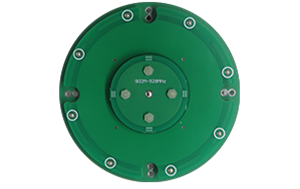
Harxon HX-CSX339A internal surveying antenna with a circular green circuit boardHarxon HX-CSX339A internal surveying antenna with a circular green circuit board

Harxon HX-CSX339A

The Harxon HX-CSX339A is a four-system, full-band internal surveying antenna combining GNSS and radio antenna elements for RTK equipment integration. Its multi-feed construction supports stable phase-center positioning, while a compact Φ122 × 23.8 mm format suits surveying, robotics and monitoring equipment.

HarxonDatalinks, video & radio
Operating voltage
+3.3 to +12 VDC

Get a free quote

Product overview

The Harxon HX-CSX339A combines GNSS positioning and radio antennas in an integrated internal surveying antenna for RTK equipment. Its multi-feed design aligns the phase center with the geometric center, with phase-center error of ±2 mm. High antenna-element gain and a wide beam support reception of low-elevation signals and rapid satellite acquisition in obstructed environments. Applications include robotics, geodetic and marine surveying, waterway and dredging surveys, seismic monitoring, bridge deformation monitoring, landslide monitoring and terminal container operations.

The antenna measures Φ122 × 23.8 mm and provides 360° horizontal coverage. The GNSS element uses right-hand circular polarization, while the radio element uses vertical polarization. Connections comprise an MMCX-JW GNSS connector and an IPEX generation 1 radio connector. Operating voltage is +3.3 to +12 VDC, with current consumption of ≤45 mA. The operating temperature range is -40°C to +85°C, the storage range is -55°C to +85°C, and the humidity specification is 95%, non-condensing.
Flight control & navigationLinks & controllers

Specifications

Harxon HX-CSX339A specifications
SpecificationValue & conditions
Product typeHarxon HX-CSX339A four-system, full-band internal surveying antenna covering GPS, GLONASS, BDS and GALILEO.
ApplicationsRobotics, geodetic surveying, marine surveying, waterway surveying, dredging surveys, seismic monitoring, bridge deformation monitoring, landslide monitoring and terminal container operations.
Antenna constructionIntegrated GNSS and radio antenna design for integration into RTK equipment.
Phase-center designA multi-feed antenna design aligns the phase center with the geometric center.
Reception characteristicsHigh antenna-element gain and a wide beam support low-elevation signal reception and rapid satellite acquisition in obstructed environments.
GNSS frequency coverageGPS L1/L2/L5/L-Band; BDS B1/B2/B3; GLONASS L1/L2/L3; GALILEO E1/E5a/E5b/E6; QZSS L1/L2/L5/L6; IRNSS L5; SBAS L1/L5.
Impedance50 Ω
PolarizationGNSS antenna: right-hand circular polarization; radio antenna: vertical polarization.
Horizontal coverage360°
Output VSWR≤2.0Antenna characteristics.
Maximum gain5 dBiGNSS antenna.
Phase-center error±2 mm
L2 amplifier gain34±2 dBLow-noise amplifier; L2 band.
L1 amplifier gain32±2 dBLow-noise amplifier; L1 band.
Noise figure≤2 dBLow-noise amplifier.
Amplifier output VSWR≤2.0Low-noise amplifier.
In-band flatness±2 dBLow-noise amplifier.
Operating voltage+3.3 to +12 VDC
Operating current≤45 mA
Differential transmission delay≤5 ns
Antenna dimensionsΦ122 × 23.8 mm
GNSS connectorMMCX-JWGNSS connection.
Radio connectorIPEX generation 1Radio connection designated 915M.
Operating temperature-40°C to +85°C
Storage temperature-55°C to +85°C
Humidity95%Non-condensing.

Related guides