Product overview
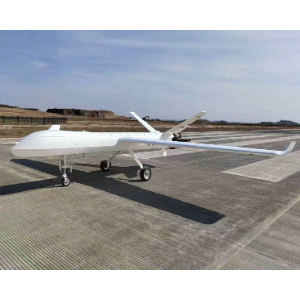
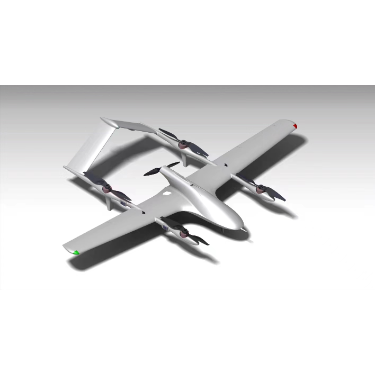
The ikingtec Yunsheng Zhineng Orca Tiger-Den Mobile Autonomous Inspection System brings together the Orca industrial UAV, Tiger-Den mobile automatic docking station and four-dimensional holographic management platform. It supports inspection missions in which the aircraft takes off at point A and lands autonomously at point B after the station relocates. With the aircraft and station working autonomously together, one system supports up to 8 hours of uninterrupted inspection within a 6km inspection range. Maximum aircraft flight endurance is 66min.
The aircraft has a one-piece 2k carbon-fiber airframe, weighs 6.5kg with its battery installed and carries a maximum load of 7kg. Its protection ratings include IP55, Class A resistance to strong electromagnetic interference and Level 7 wind resistance. The mobile station uses precision mechanical equipment and electrical controls to replace batteries and sensor pods automatically. The sequence from landing through battery replacement to renewed takeoff takes 3min. Before each mission, it checks battery charge, sensor-pod operation, weather and navigation-satellite count.
Interchangeable sensor pods support zoom imaging, full-frame photography, voice broadcasting, laser-and-image fusion modeling and thermal imaging. The zoom pod provides 30× optical and 60× optical-electronic hybrid zoom, a three-axis self-stabilizing gimbal and 128 G storage. The full-frame pod delivers 61-million-pixel images with five-axis stabilization. The loudspeaker has an effective sound projection distance of ≥300m and operates at -10~+40℃. The modeling instrument offers ±2cm ranging accuracy, while the thermal pod measures temperatures from -20~+600℃.
The mobile docking station uses an automotive-grade industrial battery for independent power, with 220v charging, automated charge/discharge management and simultaneous rapid charging in multiple aircraft-battery bays. Built-in temperature regulation and drainage work with a micro-weather system, alongside protection rated up to IP55. Transmission and control use a 5G-compatible mobile network. Individual aircraft IDs enable matching with automatic docking stations; fleet management is supported after grid deployment of the overall system. Open platform APIs connect ground-based intelligent IoT devices with the aerial inspection system.