Product overview
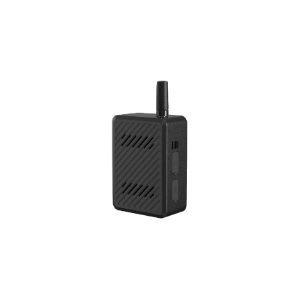
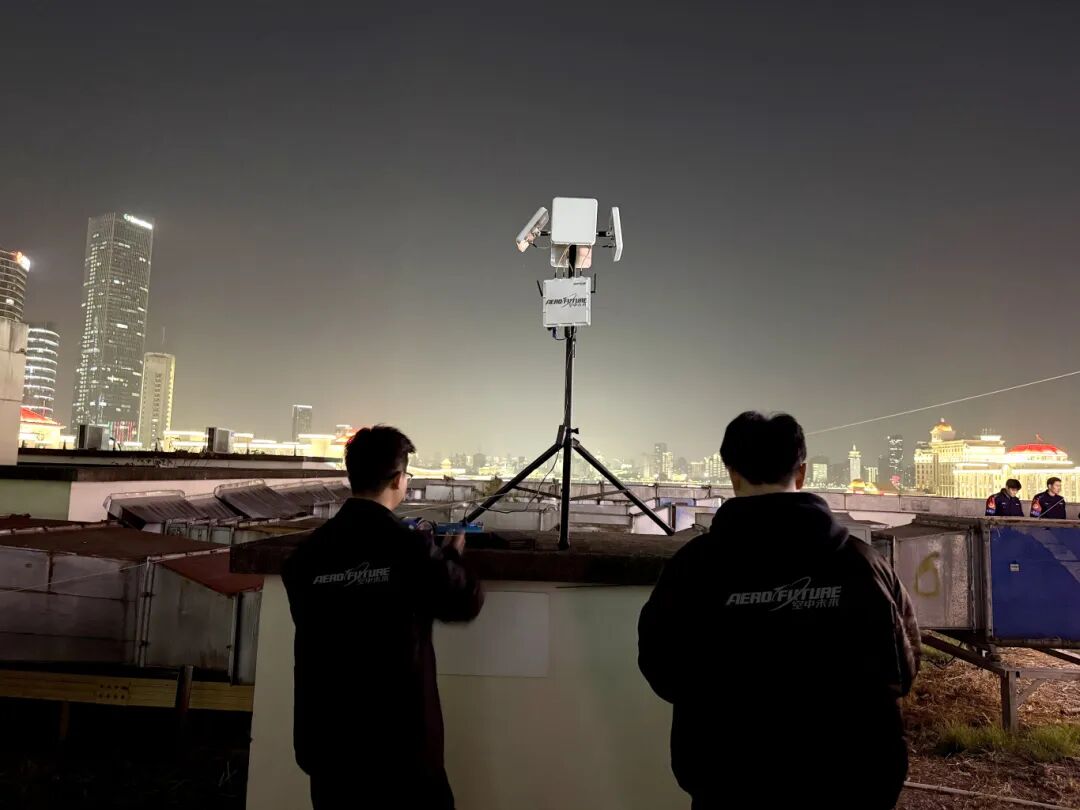
The Aero Future R200 is a ground receiving station for UAV identity, location and flight-status monitoring. Its four independent receiving channels decode 2.4GHz and 5.8GHz Wi-Fi broadcasts and 2.4GHz Bluetooth broadcasts. Received information includes aircraft ID, model, speed, coordinates and altitude, together with remote-controller coordinates. Simultaneous monitoring capacity is at least 100 UAV targets. The physical installation uses pole mounting and a directional panel antenna with 9dBi gain at both specified antenna frequencies, supporting fixed monitoring deployments.
Installation requires a 12V DC supply, with power consumption of 8W. The station has an IP66 protection rating and operates from -20°C to 55°C. Ethernet and LTE 4G provide network connectivity: Ethernet supports TCP and UDP, while 4G supports TCP, UDP, MQTT and HTTP. JSON messages and a specified 20ms processing latency support data transfer into monitoring systems. RIDNetConfig companion software reads and configures network parameters, including destination addresses and ports, while the receiver can serve as a node in a multistation sensing network.
Effective detection distance is 5km in suburban conditions and 2km in urban conditions, varying with the UAV model and deployment electromagnetic environment. The R200 depends on aircraft actively broadcasting identification messages. It cannot directly detect aircraft whose identification equipment is absent, disabled or modified so that no identification signal is broadcast. For broader sensing coverage, it supports coordinated deployment with low-altitude surveillance radar, radio-frequency detection and electro-optical equipment. These integrations extend the system architecture around the receiver while retaining its specific role as a cooperative Remote ID receiving station.
Specifications
| Specification | Value & conditions |
|---|---|
| Product type | Aero Future R200 ground monitoring station for UAV detection |
| Power supply | 12V DC |
| Power consumption | 8W |
| Operating temperature | -20°C~55°C |
| Effective detection distance | 5km in suburban conditions; 2km in urban conditionsSuburban and urban operating conditions respectively; distance varies with UAV model and the electromagnetic environment at deployment. |
| Antenna gain | 9dBiAt 2.4GHz and 5.8GHz. |
| Target processing capacity | 100 |
| Processing latency | 20ms |
| Mounting method | Pole mounting |
| Antenna interface | Directional panel antenna |
| Communication interfaces | Ethernet interface and LTE 4G wireless network interface |
| Network protocols | Ethernet: TCP, UDP; 4G: TCP, UDP, MQTT, HTTP |
| Water protection rating | IP66 |
| Message format | JSON |
| Received identification information | UAV ID, UAV model, UAV speed, UAV latitude and longitude, UAV altitude, remote-controller latitude and longitude, and other information |
| Receiving channels | 4 independent receiving channels |
| Monitored target capacity | At least 100 UAV targetsSimultaneous monitoring. |
| Supported broadcast signals | 2.4GHz / 5.8GHz Wi-Fi broadcasts and 2.4GHz Bluetooth broadcasts |
| Identification method | Cooperative identification by receiving UAV operating identification / Remote ID broadcastsThe UAV actively broadcasts operating identification or Remote ID messages. |
| Detection limitation | Cannot directly detect UAVs that do not broadcast identification signalsUAV identification equipment is absent, switched off, or modified so that identification signals are not broadcast. |
| Multisensor integration | Supports coordinated deployment with low-altitude surveillance radar, radio-frequency detection and electro-optical equipmentDeployment alongside additional sensing equipment. |
| Network configuration software | RIDNetConfig companion host software reads and configures network parameters, including custom data destination addresses and ports |
| Network integration | Supports multistation networking within a low-altitude sensing networkDeployment as a front-end receiving node. |
| Standards basis | Supports broadcast operating identification signals under GB 46750-2025, effective May 1, 2026; designed with reference to GB 42590-2023 and the trial minimum operating identification performance requirements for civil micro, light and small UAVs |
Request a quote for Aero Future R200
Send your application, destination country and expected quantity to the ChinaDrone team. We can discuss product selection, configuration and sourcing from China.
Submit your procurement requirements ↗No account needed. A model number is optional. Your enquiry is handled by ChinaDrone.