| Deployment | Indoor deployment (IP43) |
|---|
| Operating modes | Standalone local (on-screen alarms) / networked (wired + wireless, reporting + remote control), multi-mode |
|---|
| Reception method | Passive reception |
|---|
| Typical users | Watch / duty personnel; airspace regulatory authorities |
|---|
| Reception protocols | ASTM F3411-22a / ASD-STAN EN 4709-002 / GB 46750-2025 / GB 42590-2023; both bands parsed by S3; reception chain implements passive scan + promiscuous mode, TX disabled in firmware |
|---|
| RID frame parsing accuracy | ≥99% within the dwell windowWithin the dwell window. |
|---|
| Typical detection range | 1–3 km |
|---|
| Broadcast reception processing latency | ≤50 ms (mandatory per GB 46750) |
|---|
| Tracking table capacity | 50 entries |
|---|
| Wired uplink | W5500 + RJ45, TCP client connects to upper computer on port 8600 (default 192.168.50.100:8600, supports multiple simultaneous devices) |
|---|
| Wireless uplink | S3 built-in Wi-Fi STA mode, connecting to LAN or cloud |
|---|
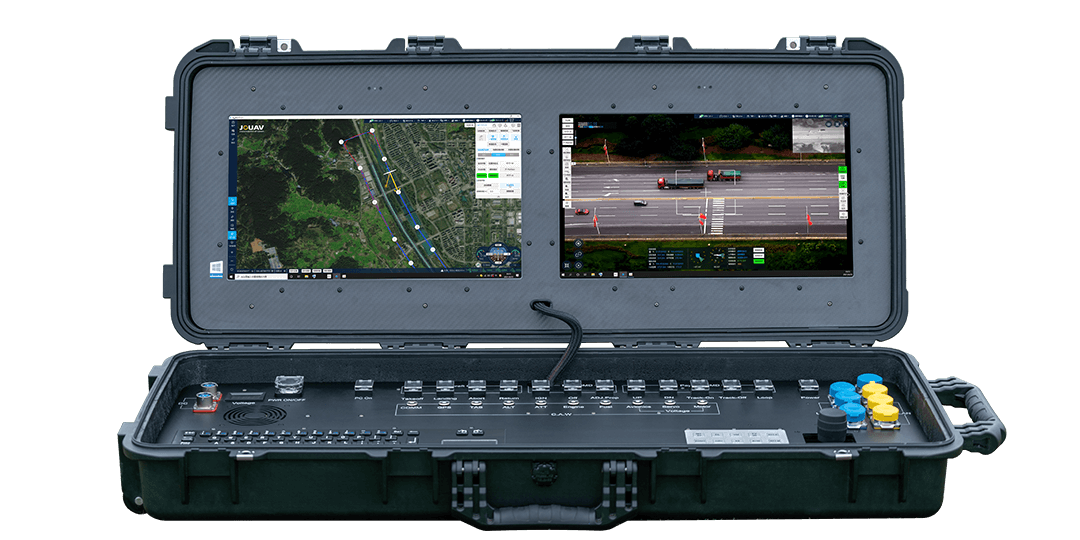
| Upper-computer forms | Desktop monitoring centre (TLV / TCP protocol); mobile APP (MQTT over Wi-Fi) |
|---|
| Upper-computer protocol | SOF (2B 0xAA55) + VER (1B 0x01) + TYPE (1B) + SEQ (2B) + LEN (2B) + PAYLOAD (N) + CRC16 (2B), little-endian; CRC-16/MODBUS covers TYPE to PAYLOAD. TYPE: heartbeat 0x01 / devstatus 0x02 / rid 0x11 / specsnap 0x20 / spool 0x30 / model 0x40 / cmd 0x80 / ack 0x81 (acous 0x10 unused by this product); all frames except 0x81 require acknowledgement |
|---|
| GPS (self-positioning / time sync) | GPS module on UART1 at 9600 + active antenna; third time source, anti-spoofing cross-check and self-position logging |
|---|
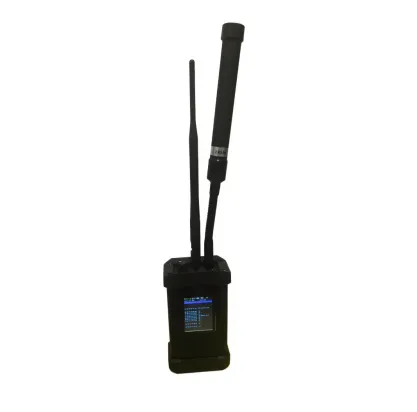
| Display / Controls | 2.8" 320×240 LCD + rotary encoder (menu configuration and alarm display) |
|---|
| Concurrent device connections | ≥50 devices |
|---|
| Overall dimensions | 130 × 80 × 40 mm |
|---|
| Ingress protection | IP43 |
|---|
| Installation and operation | Desktop placement; 2.8" 320×240 LCD + knob; indication via screen backlight + active buzzer, with charging indicator LED |
|---|
| Operating temperature | 0 °C ~ 55 °C |
|---|
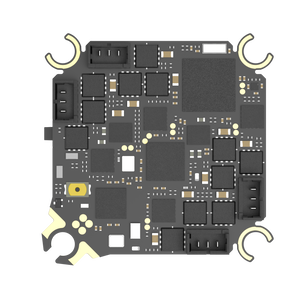
| Main controller | ESP32-S3 with on-board antenna; unified parsing of both raw-frame streams, target tracking, alarm arbitration, dual-channel uplink, LCD + EC11, GPS and power management |
|---|
| RF front-end construction | Each 2.4G / 5.8G reception path uses antenna → limiter → BPF → LNA → module; LNA sensitivity improvement 10 dB; band-pass filtering improves adjacent-channel / out-of-band rejection and blocking margin |
|---|
| Power supply and battery | DC 5 V / 2 A; 1S 5000 mAh Li-ion; charge-while-operating, battery level display and low-battery alarm |
|---|
| Standby time | Greater than 8 hoursStandby. |
|---|
| Dual-band RID reception | Simultaneous reception of Wi-Fi management frames and BLE broadcasts on 2.4 GHz and 5.8 GHz; 2.4 GHz supports CH6 / CH11 polling or locking, 5.8 GHz locked to CH1492.4 GHz: CH6 / CH11 polling or locking; 5.8 GHz: locked to CH149. |
|---|
| Operational data output | Aircraft ID, position (lat/long), altitude, ground speed, heading and timestamp |
|---|
| Alarm functions | WARNING / ALARM levels; on-screen alarm list, buzzer and real-time reporting to the upper computer; RID alarm behaviour configurable through the local menu or upper computer |
|---|
| Message decoding limits | Decodes 0x0 Basic ID and 0x1 Location-Vector; does not yet decode 0x2 Auth, 0x3 Self-ID, 0x4 System or 0x5 Operator ID; 0xF Message Pack serves as a container only |
|---|